
Knowledge Hub

Factora Academy

Knowledge Hub · Courses · IoT.Factora · Implementation · 12 min

Hypercare and audit

What to watch, what to escalate, audit trail.

Introduction

What this covers

What to watch in the first two weeks, and which problems go to the product team versus the hardware vendor.

Why it matters on the floor

A copilot answer that invents a KPI is a product defect. A dead battery sensor is a vendor visit. Mixing those up wastes the hypercare window.

By the end you can

  • Watch failed logins, rate limits, gateway heartbeats next to sensor offline, missing OEE, and energy resets
  • Treat an invented copilot number as a defect to report, not as a figure to repeat to the customer
  • Use the factory audit trail, and send radio or power faults to the gateway vendor

About 12 minutes. Prerequisites: Cutover to live, and the role handover, so the people on the call already have the right access.

Hypercare

First two weeks:

  • Failed logins and 429s (brute force vs typo)
  • Gateway heartbeat vs sensor offline
  • OEE N/A vs real downtime
  • Energy resets
  • Copilot answers that invent KPIs (defect)

Audit trail is per factory. Ingest does not flood audit. Escalate product defects to Factora; escalate radio and power to the hardware vendor chosen for the site.
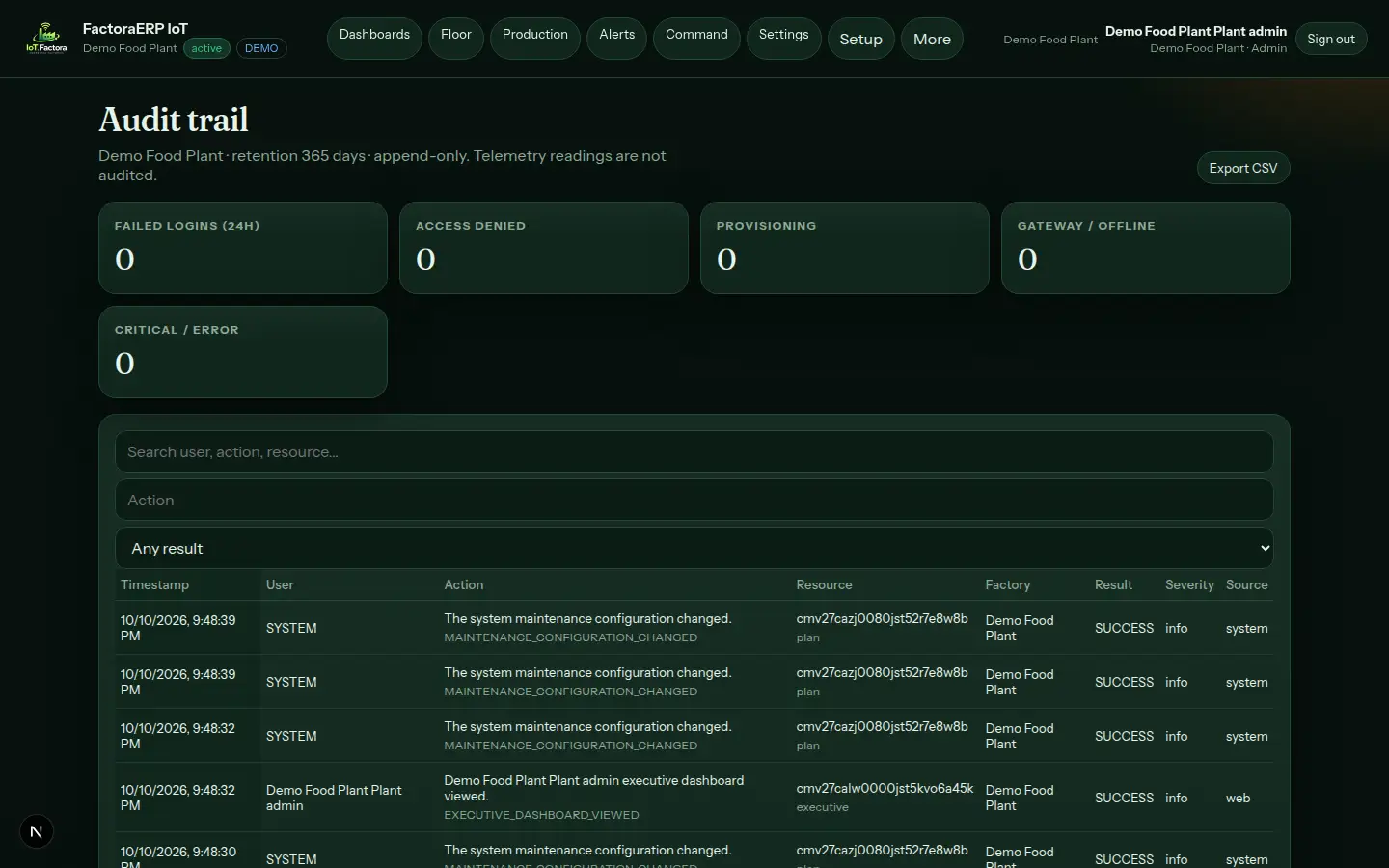
Audit for this factory. Readings do not each become an audit row.
Watch failed logins and configuration changes here. A quiet audit during ingest is expected.
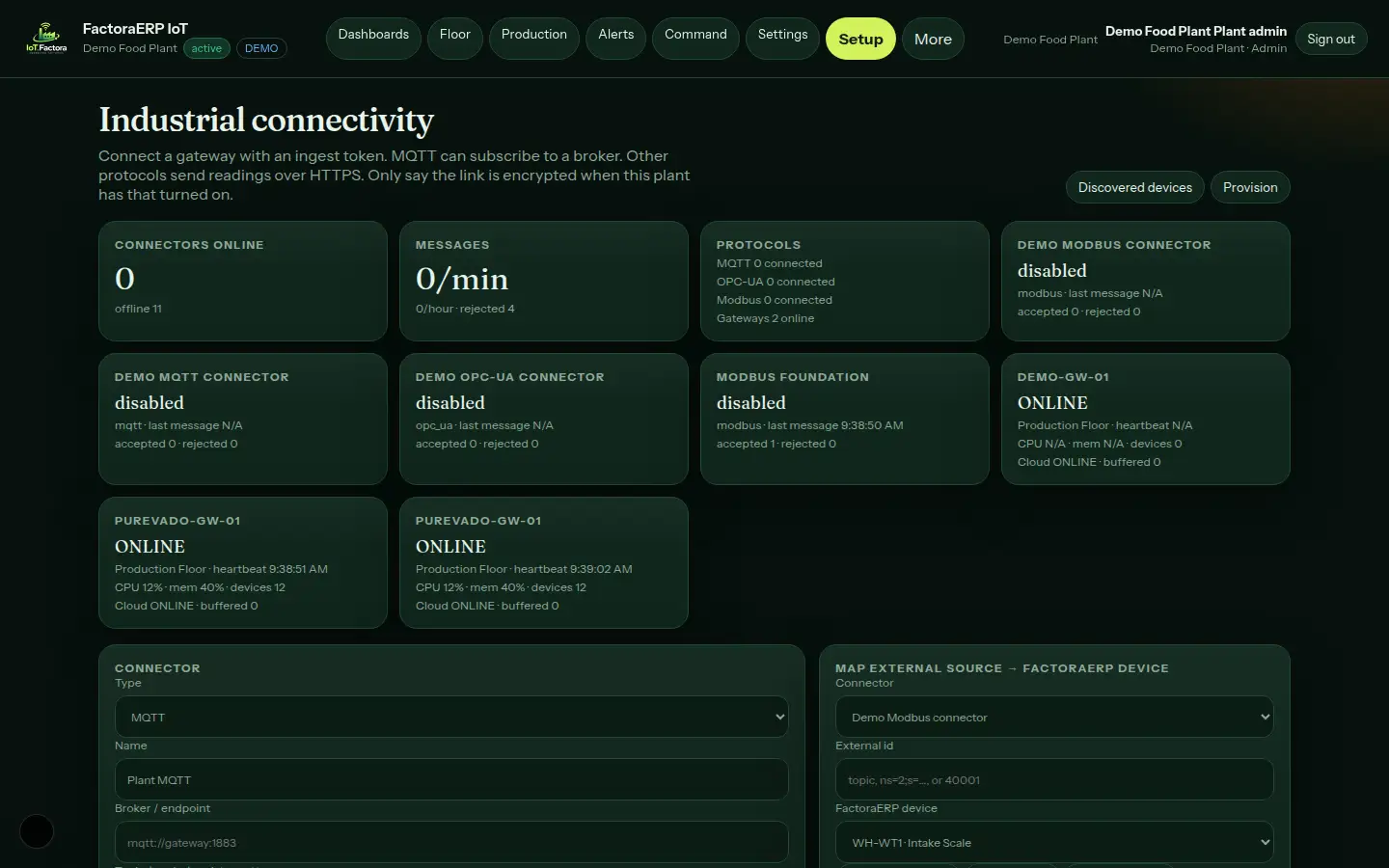
Gateways and data, for a heartbeat that is stale while one sensor is offline.
Compare the gateway heartbeat with the sensor registry before you call every machine down.

Walk the screen

  1. For two weeks, watch failed logins and rate limits, gateway heartbeats beside sensor offline, OEE N/A versus real downtime, and energy resets.
  2. Treat an invented copilot number as a product defect. Report it. Do not repeat it to the customer.
  3. Send radio and power faults to the gateway vendor.
  4. Use the factory audit trail for configuration and access. Do not expect every reading to become an audit row.
  5. Keep the daily list short enough that a blocker is fixed before the old sheet returns.

Worked example

A quiet audit during a busy ingest hour is expected. A copilot sentence that invents OEE is logged as a defect the same day. A dead battery sensor goes to the sensor installer visit, not to the product team.

Common mistakes

  • Escalating a dead battery as a software defect.
  • Repeating an invented copilot KPI to the customer.
  • Expecting an audit row per MQTT packet.

Recap

  • Watch access, heartbeats, OEE evidence, and energy resets.
  • Invented numbers are defects.
  • Radio and power go to the vendor. Product defects go to Factora.

Create a free account or log in to save this lesson on your progress.

Check understanding

Progress is stored in this browser until you log in. Passing is 70%.

1. Every MQTT packet must create an audit row.
2. A copilot answer that invents a KPI should be
3. A dead battery sensor is escalated to
4. A quiet audit log while readings are arriving means